A new composting toilet was purchased off Kijiji by Tom Hepburn in 2020. The cost was $1,200. Like-new condition, never installed and by getting it secondhand we saved about $600. It was transported to the cottage that summer.
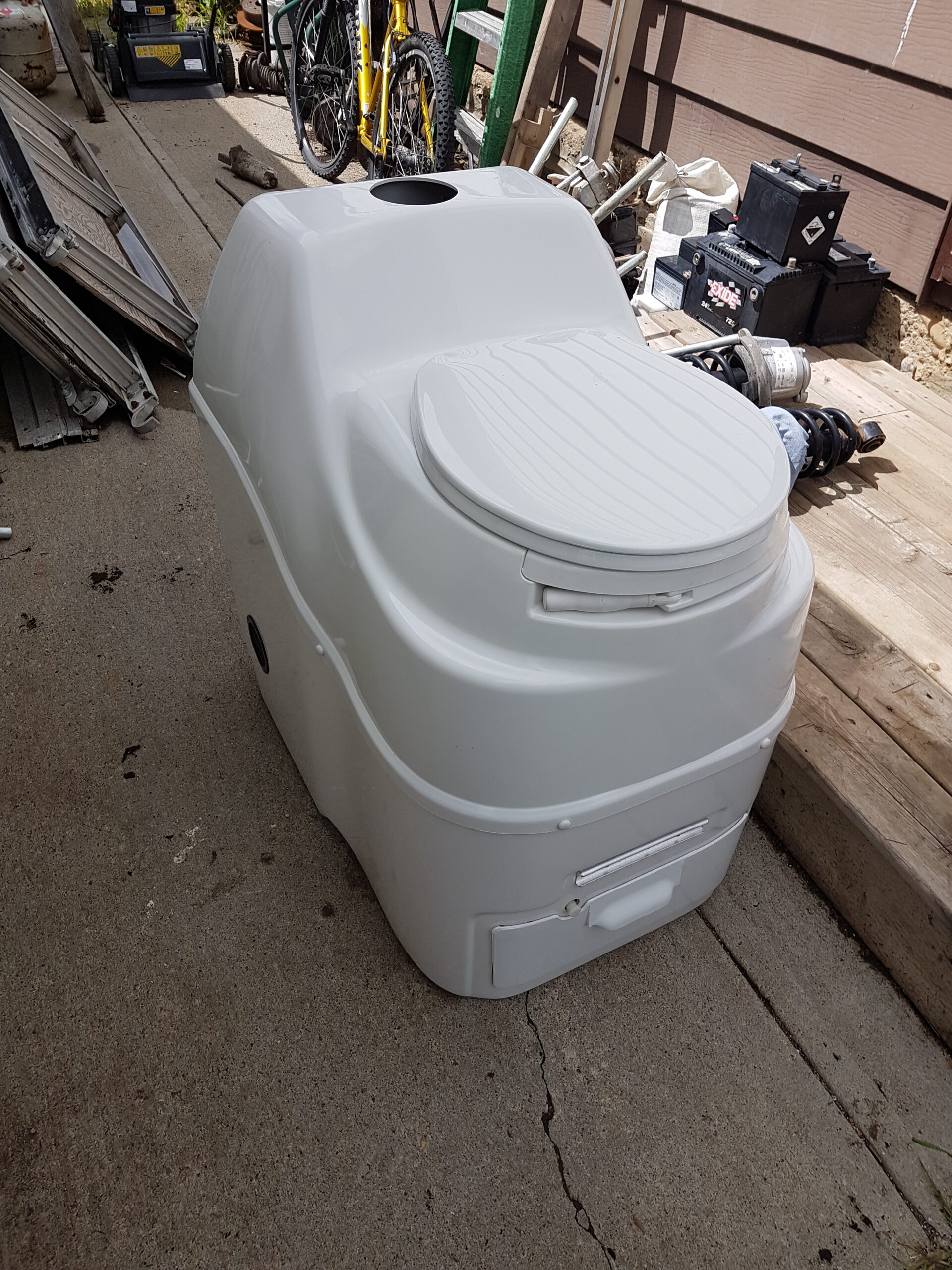
Owners Manual w/serial No.
On-Going Maintenance
There are several products needed for use and service of composting process.
- Bulking agent such as chopped straw, coconut fibres. These can be purchased locally but are expensive when purchased in small bags (convenience factor). Note that the use of wood shavings or saw dust is not recommended as wood uses nitrogen when it decomposes which is counter-productive for decomposition.
- Composting liquid/Powder agent. The powder agent is best as freezing has no affect on it. Both are enzyme based. Enzymes are helpful in digesting the waste into compost.
- Diatomaceous earth. A white powder derived from Silicate rock (diatomes). Diatomite is of value as an insecticide in the composting drum and does not affect the bio-active process of decomposition. Diatomaceous earth can be found in garden centres, Amazon, or in larger quantities at pool supply companies (used in water filtration). More information at Wikipedia: https://en.wikipedia.org/w/index.php?title=Diatomaceous_earth&oldid=1307261435
Close-Up and Opening of Cottage
The toilet needs to be part of the close-up checklist and the Opening Checklist.
- Before use in the spring, rotate the drum and follow the procedure for emptying the finishing tray. The finishing tray holds “fully composted material” and according to Park regulations we can dump this anywhere.
- When closing the cottage for the year, add enzyme, bulking material, and rotate drum one last time. Sprinkle Diatomaceous earth in drum. Clean the top part of the toilet and put latch on door.